Blazing Forward: New UAB Initiative Helps Build Alabama's Next Generation of Public Servants
By Lauren Lockhart
The Alabama Public Service Training Initiative (APSTI) began to take formation when seed funding was secured through the 2024 cycle of Strategic Investment Funding at the University of Alabama at Birmingham, securing a multi-year timeline for the program’s mission of engaging and supporting the public-service workforce.
Kristin Boggs, a longtime partner, supporter, and friend of the DMC, was named Director in March. Dr. Peter Jones, APSTI Research & Curriculum Director, was a key player in the creation of the Initiative and helped set the three key objectives to reach their goal of supporting public service:
Providing additional professional development training for people in the nonprofit and local government sectors.
Highlighting the great work already being done in the public sector.
Creating a pipeline of students with the civic skills to participate in their communities and to expose them to different aspects of the public sector to grow interest and to support an ongoing workforce.
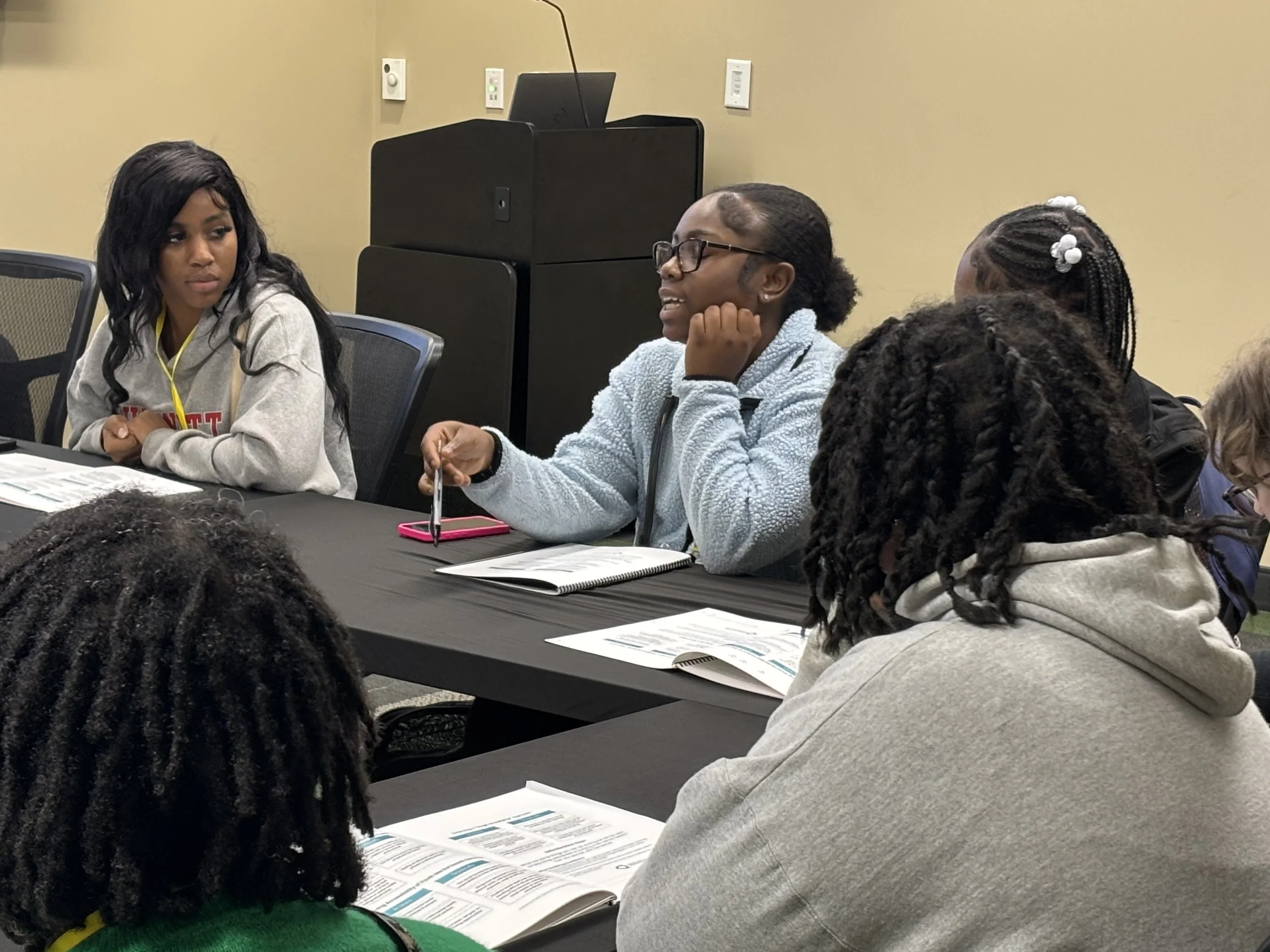
These goals led to the creation of programs like the Unsung Heroes Award, micro-credential training courses, and the Future Public Service Leaders Academy (FPSLA), a weeklong immersive experience for high school students, focused on nurturing interest amongst students to be engaged citizens. The DMC had the pleasure of joining in October 2025 to conduct a deliberative dialogue training and forum as part of the academy.
Surveys provided by the National Assessment of Educational Progress (NAEP) emphasized the need for participatory citizenry skills, such as being able to research, ask questions, and discuss public issues, or thinking critically about “wicked problems” and the way we make decisions to address them. Whether students who participate in FPSLA decide to enter the public sector or not, these skills are important to build and develop as a citizen or community member.
From here, a week-long curriculum for FPSLA grew, emphasizing these public-service-centered skills,as well as the values underpinning this work:
Accountability - The role of stakeholders, constituents, and funders in the decisionmaking process.
Problem Solving & Evidence Based Decision Making - How do organizations define their goals and mission; how do they then measure and track outputs to know they are solving a problem, and how do they pivot and adapt when they may not?
Participatory Practices - People-centered conversations and approaches to make decisions with the local community in mind.
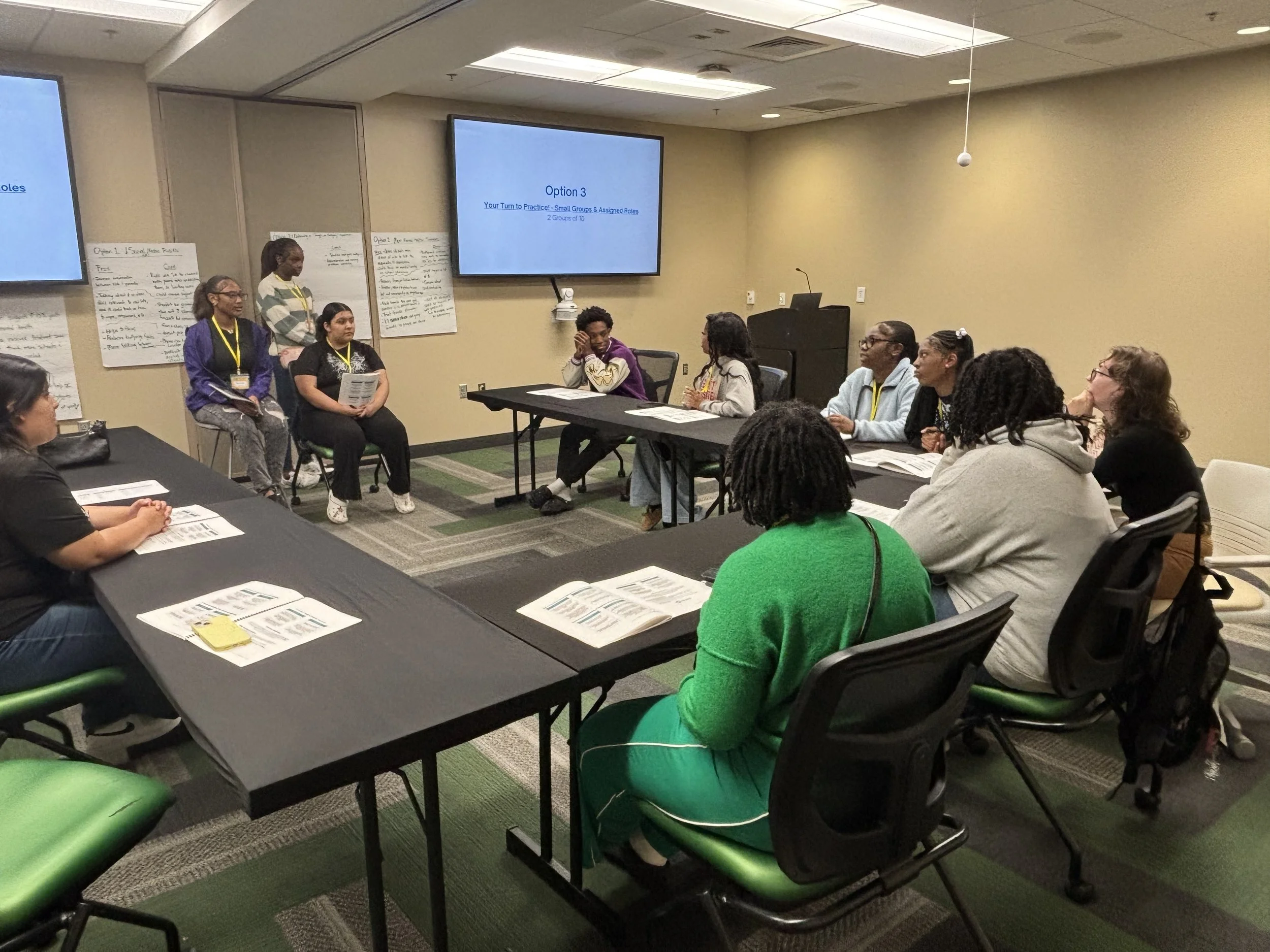
The DMC stepped in to assist with the final area of focus. “Honestly, I think that's the day that we saw the most engagement from students and when they were reflecting on the week that was what they talked about the most,” Kristin mentioned of the deliberative dialogue training and forum. With the use of the DMC’s “Youth Mental Health” junior guide, Kristin continued to explain, “I think they appreciated having their voice be heard, and the topic, of course, was about how to solve and improve your mental health. And, it felt like they all related to it in a really personal way, either because of their own personal experiences or someone else that they knew. I think that was helpful in that it was something that they felt like they were experts in and could therefore have a valid perspective to share.”
While the first two approaches of the guide were facilitated in typical fashion by DMC staff, FPSLA participants were asked to step in and practice moderating for approach three. Reflecting on this portion of the training, Kristin explained, “They were obviously a little nervous about moderating but ultimately stepped up, and I think their peers really reinforced the risk that they took. They were still talkative and that was just really encouraging to see… That’s what we were trying to emphasize to them; this was a safe space for them to practice, right? We didn't expect them to be experts in it, but it was just more about practicing those skills.”
This safe space for practicing civic skills continued through the end of the week, where students used what they learned to decipher their interests and to think about what’s next for them. In doing so, students participated in a series of mock interviews and conducted a career interest inventory for themselves, leading them to research two career possibilities. These activities further guided them in the following networking fair, their final activity of the week, where eight organizations shared current opportunities, whether that be jobs, internships, or degree and certification programs in the public service sector.
APSTI will host their second FPSLA in June 2026. While some of the programming may be adjusted, Kristin says that she hopes this academy will give students “...an opportunity to envision their future self,” as well as put APSTI in the continued position to be a connector of students, educational institutions, and public service organizations and expand geographically in the following years.
For more information about APSTI or their current programs, you can reach director Kristin Boggs at kboggs@uab.edu.