Goodbye, Hello: The Chauntina Story
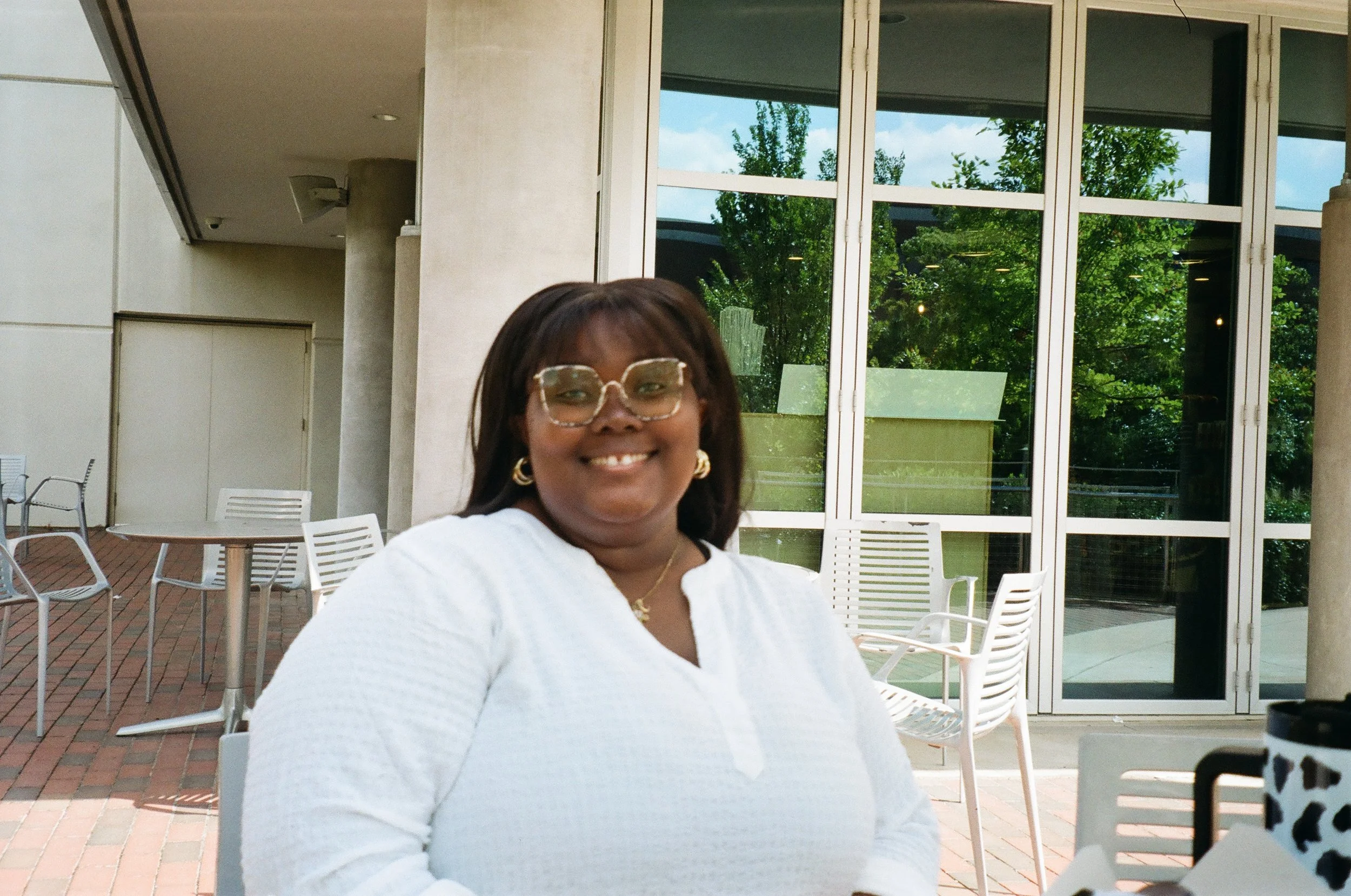
By Lauren Lockhart
Entering her third act at the David Mathews Center, Program & Outreach Coordinator Chauntina Whittle reflects on her past year as the Center’s McKenzie Civic Fellow, as well her hopes, goals, and ambitions in her new role supporting deliberative dialogue and communities across Alabama.
What was one of your favorite programs or moments during your Civic Fellow year?
“I loved creating the Let’s Talk Alabama program. At first, it was just an idea…exploring skills in video editing and graphic design, two things I love to do on the side as a little hobby. It was fun to bring in something I enjoyed outside of a professional career.”
While Chauntina claims it may be “a little selfish” to talk about a program that she initiated, these clips and videos have made the vocabulary of civics and deliberative dialogue more accessible, and introduce topics that individuals may have never heard of before or had the chance to be introduced to yet.
“I wanted to explore more of how to make them fun and exciting and engaging while still educational for even sixth graders to understand the topics we are covering… It helped me learn more about the world of deliberative dialogue and style of conversation myself - every week getting ready, making content, and using the skills that I have learned to help others do the same.” And the informational clips have done just that, highlighting the different roles and stages in a forum needed for a forum, as well as the different forms of moderating to create a constructive atmosphere for deliberation.
What are you looking forward to in your new role as Program & Outreach Coordinator?
“Expanding on what I was able to do as a civic fellow” comes to mind as Chauntina thinks about the future of the Mathews Center, being “able to help out with so many programs, and now have the opportunity access to different resources to expand these programs.”
Chauntina also wants to continue to be a people connector like one of her role models Cristin Brawner, Executive Director of the National Issues Forums Institute. Chauntina said Cristin “became a connector for different people who were interested in talking about different topics or collaborating, and she is the center point for a lot of those people.” If you’re familiar with the Mathews Center, you most likely know (or have heard of) Cristin. LIkewise, Chauntina wants to “make her face known to those in Alabama who are doing great work, walk alongside them, and see if there’s any way we can help and support the work they do. Help them, and us, expand and do different things that are new and innovative in the world of deliberative dialogue.”
As a civic fellow, Chauntina has already done just that, not only creating the Let’s Talk Alabama series, but diving into creating junior guides, such as the recent “Youth Mental Health” guide for middle and high school students - a condensed and more digestible form of issue guides that helps students engage more deeply in the conversation without having to worry about the nitty gritty.
Did you see any connection or skills passed on from your experience as a JOIP into your Civic Fellow experience? Any big takeaways?
Chauntina is the Center’s longest serving intern in the JOIP. She spent five years working in the Office of Civic Engagement, four as an intern and one as an AmeriCorps VISTA employee. She helped shape many of their current programs, from the initial stages of the Troy Civic Lab to transitioning and passing the reins to the next long-term intern, Jayden McQueen.
“Being part of the internship at Troy, specifically in civic engagement, and being able to be creative in new ways to address challenges, even if they seem roundabout and out of the way. I walked away from that experience able to work in any type of situation, environment, work with any type of person, and do things that are great and grand, even with little resources or little time. I have transferred and even grown that skill of adaptability into any situation.”
When asked about a particular time she noticed this adaptability, her moderation skills came to mind, “how it has become so malleable.” Particularly when working with middle school students, “I think of my early days making discussion guides and activities for them.”
Recalling one of the Civic Lab’s early and continued programs, Chauntina and the Civic Engagement team would join middle school students to talk about implicit bias: the only conscious bias we all hold and how we often categorize people before actually knowing them, or on first impressions. This activity was perfect for this age group because they wanted, “...no filter. We wanted people to say what they needed to say and work backwards.” Although it prompted some unexpected responses, it gave Chauntina the opportunity to “...think on my feet and work backwards. Conversations could’ve gone very differently without those skills of adaptability.”
Any advice for future Civic Fellows, JOIPs, or anyone who wants to get more involved?
“The cliche thing to say is just do it (no shoutout to Nike), but it’s important to elaborate on that. It’s easy now looking back after doing it and having some pipeline into the Mathews Center with being the longest JOIP intern. It was almost an easy transition and makes sense to go this way, especially with my interest as a psychology major with cultural competencies and advocating for different psychological interventions for minority groups. I always had my foot in the door.”
Thinking about the people who might not have those introductions, it’s “...important for them to understand that there’s always a place for you in deliberative dialogue. You don’t have to have a specific interest. There’s so many challenges that communities face that you can be a part of helping with and moving conversation forward into action. There is no specific skill that you need in order to be a moderator or be in this realm; All skills are relative to what we do.”
While there’s no established skill set, Chauntina explains that there is one important thing to consider before engaging in this world of civic engagement: “Understanding what you’re doing it for is important because I think that pushes you and puts a fire under you to just do it. Understanding that or having a simple love for people lights a fire under me, even when I don’t want to, or there’s a hole in the bucket. Understanding what you are doing it for often times helps me put my foot out, whereas freshman me would not have… This is also very important.”
Perhaps Chauntina’s best bit of advice is something she has modeled for all of us at the Mathews Center: “Always be real and authentic. Be you, and if people don’t like it, dust off your feet and go onto the next. Because there’s always somebody else that needs you.”